

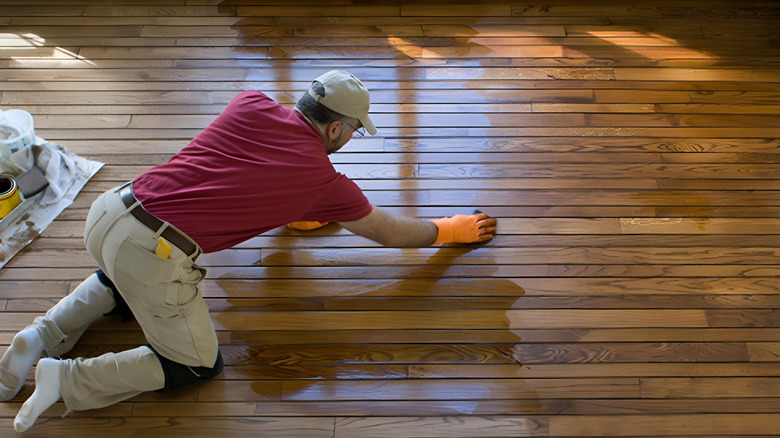
Staining hardwood floors can transform your home interior, adding new life to old flooring or updating the color and finish to give a new look and feel to the space. While staining your floor can help you achieve the desired aesthetic and functional goals, it is a process that can easily go wrong. It can be both costly and time consuming to make any mistakes while staining your hardwood floor. So, it is important to know about the common mistakes that can occur when staining your floor.
1. Not Sanding Properly
Sanding is required to achieve a pristine finish. Proper sanding is essential. Otherwise, the stain cannot be absorbed evenly. You do not want to have light and dark patches on the floor or one area looking brand new and another looking dull. Improper sanding can often require floor repair.
2. Not Cleaning the Surface
It is crucial to clean the hardwood surface for sanding and ensuring proper stain absorption. Not cleaning can cause any debris to get trapped under the stain, resulting in:
- Inconsistent absorption
- Improper finish adhesion
- Spots or marks
So, it is important to ensure thorough vacuuming before wiping the surface with mineral spirits. Make sure any cleaning solutions are dry before beginning.
3. Not Considering the Type of Hardwood
Maple tends to absorb stains unevenly. White oak and red oak can absorb stains uniformly and deeply. So, it is important to know how effectively your hardwood floor can accept the stain pigments. Otherwise, you can expect to waste time and materials, resulting in the need to restart the project. When researching the wood type, check its properties and suggested finishing techniques.
4. Selecting the Wrong Stain Color
It is common for homeowners to pick the wrong stain color in the showroom only to find that it doesn’t complement the décor or makes the interior feel darker or more congested. For example, if you like a dark shade and apply it without considering the existing décor, the rooms may feel smaller. So, it is important to test the colors before applying them.
5. Rushing Through the Process
It is common to apply the stain unevenly and quickly. An uneven coat can compromise the finish, resulting in unsightly streaks and irregular color depth. On the other hand, proper application translates into rich and even color that accentuates the hardwood grain’s beauty.
6. Neglecting Drying Times
Wood floor stains need time to cure. As with the previously mentioned mistake, rushing through the process to add another coat can leave you with a sticky surface. This can affect the finish’s durability and longevity. You should give the floor proper drying time by not walking on it too soon.
7. Staining Against the Grain
Staining against the grain is another common mistake with hardwood floor staining. This mistake can leave visible marks that give your floor an unnatural and striated look. In other words, you will not be able to benefit from the natural elegance of the wood.
It is recommended to stain in the direction of the grain. The stain pigment should penetrate the fibers. If the finish has cross-grain marks, the affected sections should be lightly sanded before the stain is reapplied. All this while, it is important to follow the grain.
Besides avoiding these mistakes, it is recommended to use the right tools to stain your hardwood floor. If there is dried wood glue, it is important to remove it. When sanding, it is also common to use an incorrect grit sequence. Avoid that mistake. It is also important not to avoid using a wood filler before staining.